1.How are HR teams preparing for the new Labour Codes? What are some of the key areas they should focus on?
The implementation of the Labour Codes is one of the most significant regulatory changes HR functions have witnessed in recent decades. As a result, organisations have begun preparing well in advance, with wage restructuring emerging as a primary area of focus. Many companies are reviewing salary structures, consulting legal and compliance experts and working towards creating standardised frameworks that can be applied consistently across employee categories and locations.
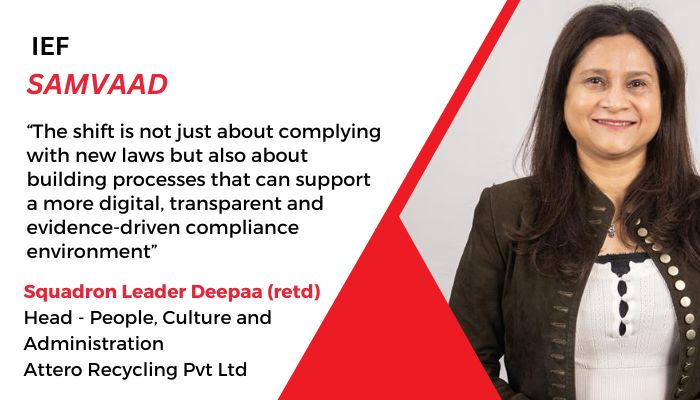
At the same time, HR teams are investing considerable effort in understanding the implications of the new framework through industry forums, webinars and discussions with experts. Beyond wages, organisations are increasingly focusing on the digitisation of records, secure data management and creating systems that are audit-ready at all times. The shift is not just about complying with new laws but also about building processes that can support a more digital, transparent and evidence-driven compliance environment.
2.What challenges do you think companies would face when different states notify different Labour Code rules?
One of the biggest challenges for employers is the possibility of varying implementation timelines and state-specific rules. While the Labour Codes were introduced with the objective of simplifying and harmonising labour regulations, organisations operating across multiple states may still need to navigate different compliance requirements depending on where they operate.
This becomes particularly challenging for companies with manufacturing facilities, offices or contractor workforces spread across different locations. Variations in minimum wages, state notifications, and interpretations of certain provisions can create operational complexities. In addition, there are still areas where regulatory clarity is evolving, which may lead to uncertainty in implementation. To manage these challenges effectively, organisations will need stronger monitoring mechanisms and technology-enabled compliance systems that can track regulatory changes in real time and support consistent compliance across locations.
3.Why is coordination between HR, finance, legal and compliance teams becoming more important today?
The changing compliance landscape is making cross-functional collaboration more important than ever before. Many of the obligations under the Labour Codes involve interconnected responsibilities that cut across HR, finance, legal, payroll and operations functions. As compliance timelines become stricter and more processes move to digital platforms, organisations can no longer operate in departmental silos.
Whether it is payroll processing, employee settlements, statutory payments, policy updates, or maintaining regulatory records, timely compliance now depends on seamless coordination between multiple teams. Organisations are therefore revisiting their internal processes, introducing new standard operating procedures, and building system-driven workflows to ensure responsibilities are clearly defined and executed efficiently. Compliance is increasingly becoming an enterprise-wide responsibility rather than a function owned solely by HR.
4.What role does technology play in managing labour law compliance today? Which areas of HR do you think AI and automation will transform the most?
Technology has become a critical enabler of labour law compliance. The new regulatory environment places a strong emphasis on digitisation, electronic records, and greater accountability for employers. Managing compliance manually is becoming increasingly difficult, particularly given the frequency of regulatory changes and the growing expectations around transparency and documentation.
Technology helps organisations centralise compliance information, maintain digital records, monitor deadlines, and track changes in regulatory requirements. It also enables organisations to create audit-ready systems with clear visibility into their compliance status. Artificial intelligence is expected to play an even greater role in the coming years by helping HR teams monitor regulatory updates, identify potential compliance gaps, automate routine tasks, and reduce the risk of human error. Areas such as compliance tracking, payroll validation, document management, reporting, and regulatory intelligence are likely to see significant transformation through AI and automation.
5.What advice would you give young HR professionals entering a more compliance-driven workplace?
The current phase presents a unique opportunity for young HR professionals to build expertise in an area that is becoming increasingly important. For several years, many professionals gravitated towards talent management, employee experience, and other people-centric functions, while labour law and industrial relations received comparatively less attention. However, the introduction of the Labour Codes, coupled with greater digitisation and a renewed focus on manufacturing and formal employment, is bringing compliance back to the centre of HR strategy.
Young professionals should focus on developing a strong understanding of labour laws, regulatory frameworks, and digital compliance tools. They should also cultivate a mindset of continuous learning, as the regulatory landscape is likely to evolve significantly over the coming years. Those who combine compliance knowledge with technological proficiency will be particularly well-positioned to succeed in the future. As organisations increasingly seek HR leaders who can balance people priorities with regulatory responsibilities, compliance expertise will become a valuable differentiator.
About the Author
Deepaa is a seasoned HR and transformation leader with over two decades of experience across the military, corporate, consulting, and start-up ecosystems. She began her career as one of the first women engineering officers in the Indian Air Force, bringing passion, resilience, and strategic acumen into her leadership journey. Currently leading People, Culture, and Administration at Attero Recycling Pvt Ltd, she is driving organizational growth and HR transformation with a strong focus on Green HR practices aligned to sustainability.
Previously, As a Fractional CHRO and Change Management consultant, she has extensive experience in building and scaling HR functions, enabling organizations to transition from entrepreneurial setups to structured, high-performing institutions. A certified OD Consultant, Deepaa specializes in organizational development, change management, and HR automation, having led large-scale digital transformations, including AI-led recruitment platforms and organizational restructuring during her tenure at the British Council & LexisNexis India. She has a strong track record in setting up HR and L&D functions, implementing RPO and HR outsourcing models, and building capability-driven, employee-centric cultures.
She is a seasoned leadership coach and trainer, with over 200+ hours of training delivered across leadership development, competency frameworks, and capability-building interventions. Her expertise spans Diversity, Equity & Inclusion (D&I), POSH, and stakeholder management, enabling her to drive transformation across complex, global, and matrixed environments. Deepaa is also the Co-founder & Principal Advisor of ManasaMitr, where she champions mental and emotional wellness through employee assistance programs and workplace well-being
Interventions.
She is a LEAP alumnus from IIM Raipur and certified in ESG Strategy and Leadership from IIM Kashipur, strengthening her ability to align people strategy with sustainable business outcomes. Recognized among the Top 50 HR Leaders shaping the Future of Work, she is a recipient of multiple prestigious awards, including the IC HR Leaders of India Award 2025, POSH Excellence Mentor Award, and Learning & Talent Technology Excellence Award. Under her leadership, Attero has also been recognized for its Outstanding POSH Policy Framework.
With a unique blend of military discipline, technological expertise, and people-centric leadership, Deepaa continues to build future-ready organizations driven by strong culture, inclusive leadership, and sustainable growth.
Disclaimer: The opinions and views expressed in this article, including any accompanying data, are the sole responsibility of the author and should not be construed as reflecting the official policy or position of India Employer Forum.