
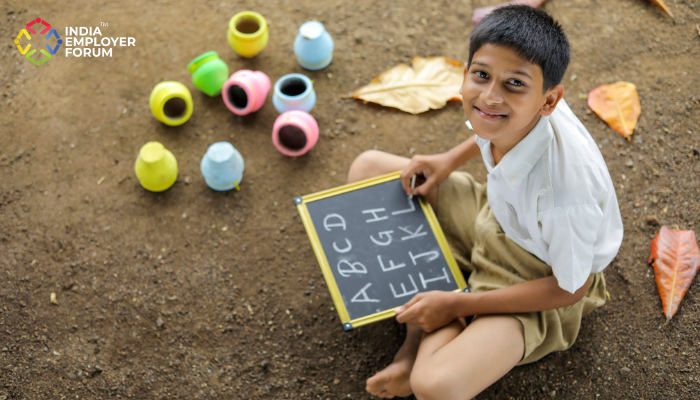
In a world that constantly evolves, education stands as the cornerstone of progress, offering hope and opportunities for a brighter future. However, for children of migrant workers, this fundamental right often remains elusive, trapping them in a cycle of intergenerational labour professions. The World Day Against Child Labour on June 12th strives to shed light on the significance of the Right to Education for these children which may perhaps be the only way for them to rise out of poverty and create a better life for themselves and their family.
Migrant workers are an indispensable part of our society that contributes significantly to the economy through their hard work and dedication. Many of these people migrate in search of employment opportunities, leaving behind their homes and families while others choose to live with their families as nomads in urban slums and shelters. One of the biggest challenges faced by these workers is in ensuring quality education for their children. Without adequate access to proper education, these young minds are at risk of being trapped in an unending cycle perpetuating the struggle and migratory lifestyle espoused by their parents.
Recognizing the urgent need to address this issue, the Right to Education (RTE) Act was enacted in India in 2009. This transformative legislation mandated free and compulsory education for all children between the ages of 6 and 14. However, despite the efforts made, the implementation of RTE for children of migrant workers remains a challenge.
The struggle to secure quality education for these children is multi-faceted. Due to geographical mobility it becomes difficult for migrant families to offer stability and enrol their children in regular schools. Frequent relocations disrupt their education, leading to gaps in learning and limited access to educational resources. Additionally, language barriers and cultural differences further compound the challenges faced by these children, hindering their integration into the education system.
To overcome these hurdles, concerted efforts are required from multiple stakeholders. Governments must prioritize the establishment of inclusive educational policies, providing necessary infrastructure and resources to schools in areas with high migrant populations. Community-based organizations and NGOs can play a vital role in bridging the gap in learning for migrant children to facilitate enrollment. In addition, they can provide support services to ensure that these children are able to get the education they need to move ahead in life. .
Furthermore, it is imperative to recognize the aspirations of migrant workers for their children’s future. A recent survey by People Matters revealed that 46% of employees would not recommend their profession to their children, indicating a desire for a better life and alternative career paths. By ensuring access to quality education, we can empower these children to break free from the cycle of labour and pursue higher dreams. Education can equip them with the essential knowledge and skills necessary to acces better opportunities thereby opening the doors to a brighter future.
In observing the World Day Against Child Labour on June 12th, let us pledge our commitment to working towards the eradication of child labour by promoting the Right to Education for all children, regardless of their background or circumstances. By investing in the education of children of migrant workers, we invest in a future where talent and potential know no bounds. Together, we can unlock their potential and build a society that thrives on inclusivity, equal opportunities, and shared prosperity.
In conclusion, the Right to Education holds the key to breaking the cycle of poverty for children of migrant workers. As a society, it is our collective responsibility to ensure their access to quality education, empowering them to create a better life for themselves and their families. Let us join hands and work towards a future where every child has the opportunity to unlock their full potential and shape their own destiny.
Reference:
- Right to Education of Children of migrant workers | PIB | June 2019
- 46% employees would not recommend their profession to their children | People Matters | Dec 2022
You might also be interested to read: The Entry of Green Jobs in the World Of Work