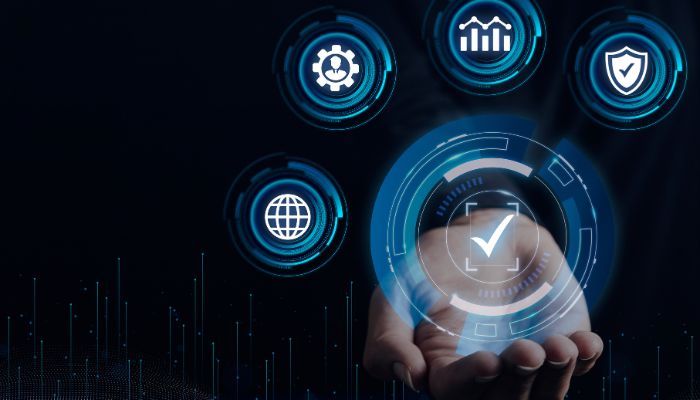
The HR department in India has made a significant shift from paperwork and procedures to platforms and prognosis. What was formerly housed in filing cabinets and Excel sheets is now powered by cloud-native HRMS platforms, automation, and artificial intelligence (AI), forming a digital backbone that links human operations to business results. HR modernization is now a strategic necessity rather than a choice, as evidenced by the rapid growth of domestic HR tech companies and the digitization of vital HR processes by public sector organizations in recent years.
The use of contemporary HRMS platforms is at the heart of this change. Compared to legacy systems, cloud-based HR suites require significantly less manual labor to provide a single source of truth for payroll, attendance, statutory reporting, employee master data, and performance workflows. Usability, mobile-first design, and analytics are being promoted as differentiators by both startups and larger vendors as Indian adopters shift from monolithic on-premise ERPs to modular, API-friendly platforms that can be integrated into current IT environments. Faster onboarding cycles, cleaner compliance reporting, and the ability to present people insights to business executives almost instantly are the outcomes.
Automation and compliance at scale
HR teams have been freed from repetitive tasks by automation, ranging from rule-based scripts to Robotic Process Automation (RPA). With audit trails and exception alerts integrated, tasks that once took days to complete, such as payroll reconciliation, statutory filings, shift scheduling, and leave approvals, can now be completed in a matter of hours or minutes. Automation lowers errors that directly impact wages and morale for manufacturing and retail employers with intricate shift rosters and large contractual headcounts; for corporate centers, it frees HR to concentrate on talent strategy instead of time-sheet corrections. The business case is becoming clear across industries: shorter cycle times, fewer non-compliance issues, and quantifiable cost savings.
In India, compliance has always been a complex administrative process. HR governance is made more difficult by the combination of federal and state laws, shifting social security regulations, and the growth of gig work. Technology is being used more and more to transform this complexity into automated filings, dashboards, and alerts. HRMS Platforms that create state-specific compliance checklists and map statutory requirements are assisting organizations in lowering regulatory risk and speeding up inspection or audit response times. With the increased emphasis on compliance and digital documentation in the new labor codes, HR must prioritize workforce data governance when selecting vendors and architectures. Moreover, recent discussions and laws on data protection further mandate these systems.
AI, skills, and the evolving HR mandate
Scale and sophistication are two complementary ways that AI is transforming hiring. In order to expedite sourcing and enhance the candidate experience, recruiters are utilizing AI to analyze vast talent pools, match skill profiles to positions, and automate early-stage candidate interactions. In addition to lowering time-to-offer, analytics-driven screening can reveal passive talent that would otherwise go unnoticed in conventional pipelines. However, adoption is not without its challenges: Indian businesses are conducting a lot of experiments, but they are also struggling with explainability, bias, and the requirement to maintain human judgment in final decisions. The logical course of action is to use AI to increase reach and find matches while keeping humans involved for cultural fit and qualitative evaluations.
The aforementioned modifications put additional strain on HR’s capacity. The HR team of the future must be proficient in basic analytics, vendor management, vendor-security assessments, data literacy, and change management. Forward-thinking companies are establishing cross-functional centers of excellence that connect HR professionals with data scientists and IT architects, establishing internal HR digital academies, and rotating HR talent into analytics roles. These investments are essential because people and processes, not just technology, alter behavior. Therefore, HR needs to take on the roles of both architect and evangelist for the enterprise’s adoption of digital technology.
Risks, responsibility, and long-term value
There are obstacles to overcome. Projects can be slowed down by upfront expenses and integration complexity; smaller businesses frequently lack the resources necessary to properly migrate legacy records, and inadequate change management can result in the underutilization of effective tools. Non-negotiable risks include data privacy and the ethical application of AI, which call for governance, vendor due diligence, and employee transparency. However, there are significant benefits to getting it right, including quicker decision cycles, more accurate compliance, improved talent outcomes, and an employee experience that meets the demands of the modern digital workforce.
Technology is now an organization’s nervous system; if people are its heart. Employers in India must create a nervous system that enhances human potential rather than diminishes it. This includes governance that safeguards rights, automation that reduces friction, AI that improves judgment, and HRMS that streamlines administration. These components work together to create the digital framework that will shape the workforce experience over the next ten years, transforming HR from a back-office task to a true partner to business strategy.
References:
- Darwinbox launches the Lightest HRMS App making it easy and accessible to every employee | The Times of India | Oct 2025
- How AI and Technology Are Reshaping Wealth Management in India Business Tech | Deccan Chronicle | Aug 2025
- Meet HR Tech Startups Modernising India’s Back Offices | Inc42 | Jan 2025
- Protect data without hurting business | New Indian Express | June 2025