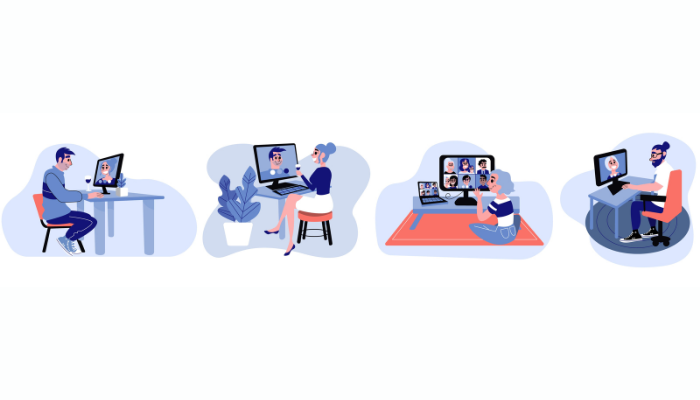
The global lockdown due to the COVID-19 pandemic has given companies something to think about. Do they really need to have employees present in a physical office space when working virtually seems to be producing the same, if not, better results? The simple answer is no. Working from home, like many of us last year, isn’t going anywhere. However, the transition is going to be gradual and we should expect to see most organizations use a hybrid workforce model. In this model, the majority of the workforce operates remotely while some core teams may have to work on-site.
A hybrid workforce has many benefits. Companies can cut down their overhead expenses by a huge margin, productivity increases and employees get the work-life balance that they always wanted. While the shift is an obvious one, it’s not a simple one. In order to maintain their unique workplace cultures, companies have to think of the challenges that a lack of physical contact can bring.
Leadership: Leading on a Zoom call isn’t the same as being in the room with all eyes on the boss. It just doesn’t have the same effect. Leaders and managers must be retrained to understand how to adapt their style and be flexible to bring out the best in employees. With the boundaries between personal and professional lives becoming blurred, leaders must be empathetic to their employees. Understanding every situation and giving employees the flexibility to deal with them can go a long way in increasing trust, productivity and even retaining them.
You might also be interested to read: The Future Of Work Is Here And Now: It’s Hybrid
Inclusiveness: One could notice two factions forming, rather unknowingly, within a hybrid workforce model – one being the remote workers and the other being the employees in office. And there will be bias. It’s only human nature. The company must strive to bridge this gap and treat the two workforces equally. Management must not overlook remote workers because they aren’t physically present. They must be given the same opportunities to bag projects and receive promotions. Companies must conduct team-building exercises with remote workers and include them in important meetings. Those working from home must constantly be in touch with their seniors in order to have their work noticed and recognized.
Engagement: When working remotely, employees can feel disconnected and unproductive. Employers need to tap into the human side of HR by engaging with them every once in a while. Companies must stick with traditions virtually and encourage one-on-one meetings, virtual lunches, coffee chats and must go beyond work calls to have a bit of fun. Also, remote workers must be encouraged to visit the office at times.
Businesses’ understanding of a workspace is constantly changing and companies and employees should be aware of the learning curve. It is important that organizations analyse their needs and choose whether to stick with the traditional in-office model or buy into the trend of flexible working. Companies are encouraged to take frequent pulse checks and continuously adapt their policies in order to get the best out of a hybrid workforce model.
Reference: No, Hybrid Workforce Models Won’t Dilute Your Culture | Jackie Wiles | 7 January 2021
You might also be interested to read:
Related Topics: